
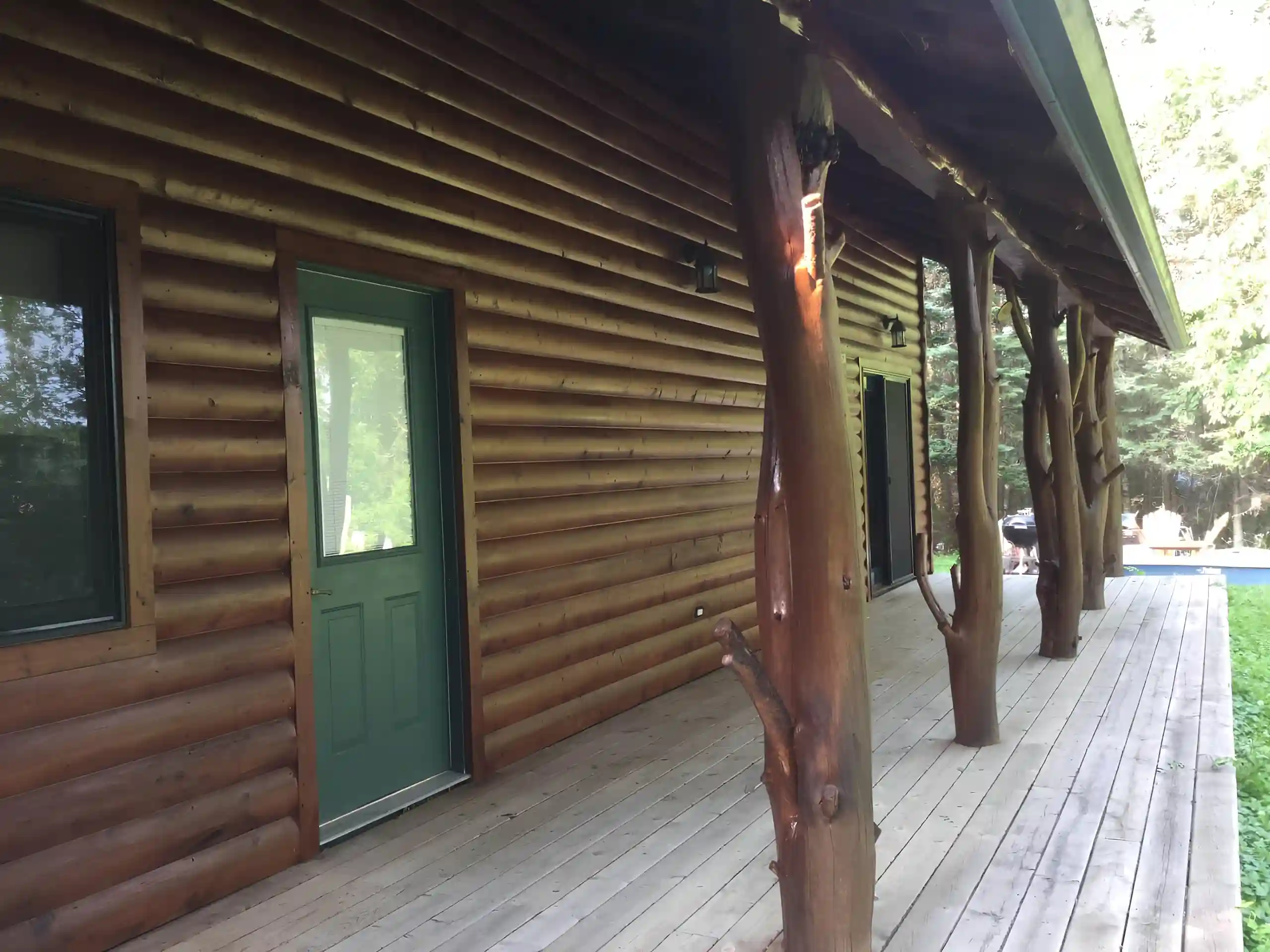
In a rush? Read this first.
Your log supports need replacement when you see clear signs of wood rot in log supports, shifting posts, or foundational cracks. Ignoring these signs leads to significant safety hazards and expensive structural instability in decks. LakeLife Homes Inc specializes in precise log support replacement, ensuring the safety and longevity of your outdoor living space in the Brainerd Lakes Area. We recommend a full inspection if you notice any signs of deck support damage.
How to Know When Log Support Needs Replacement
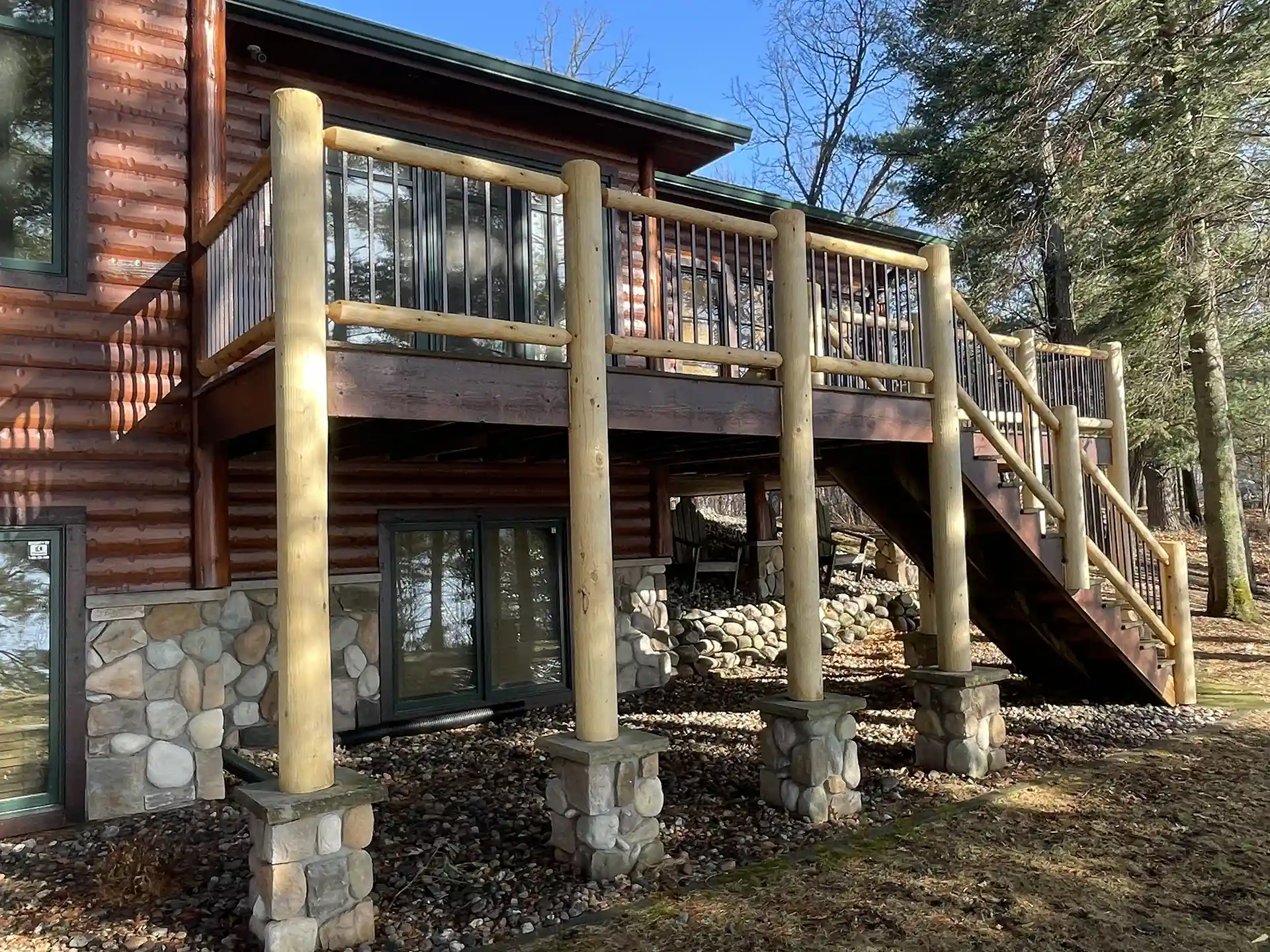
Deck log supports are a critical part of your structure. They carry the load of the deck, furniture, and people using it. Deterioration is unavoidable over time due to weather exposure and moisture absorption. We must identify structural weakness early to avoid failure and maintain safety.
A required log support replacement is one of the most important maintenance decisions a homeowner will make. The LakeLife Homes Inc team understands the specific challenges that deck support posts face in the Brainerd Lakes Area climate. We are ready to help you evaluate and restore your deck’s integrity.
What are Log Supports?
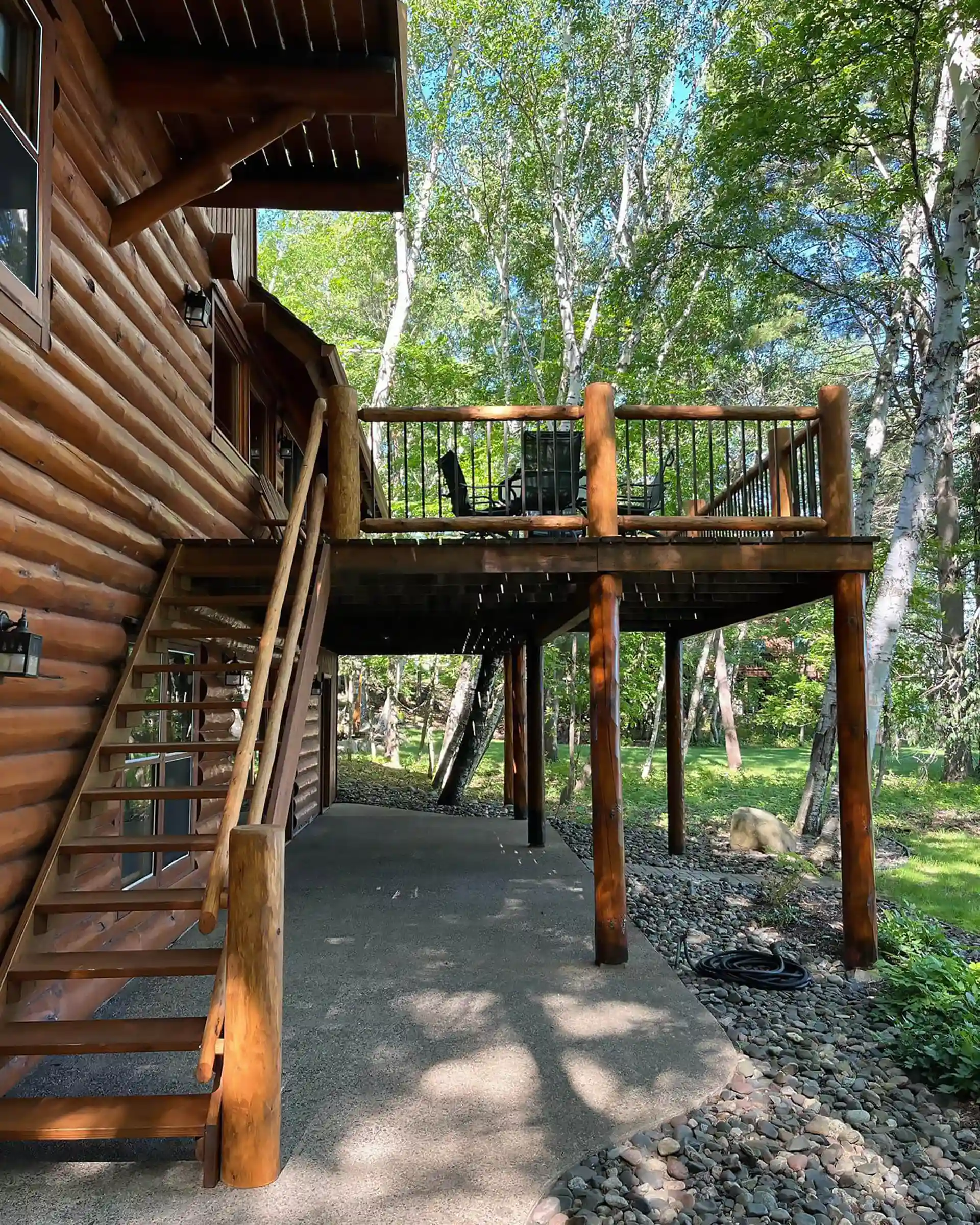
Log supports are the vertical posts, often round timbers, that transmit the deck’s weight directly into the foundation below grade. They act as the primary structural pillars, holding the entire deck frame, decking, and railing system aloft.
These deck support posts must remain plumb, true, and free of defects to distribute the immense downward forces evenly. If a log support fails, the entire section of the deck it holds will fail, resulting in severe structural instability in decks.
Key Warning Signs of Damaged Log Supports
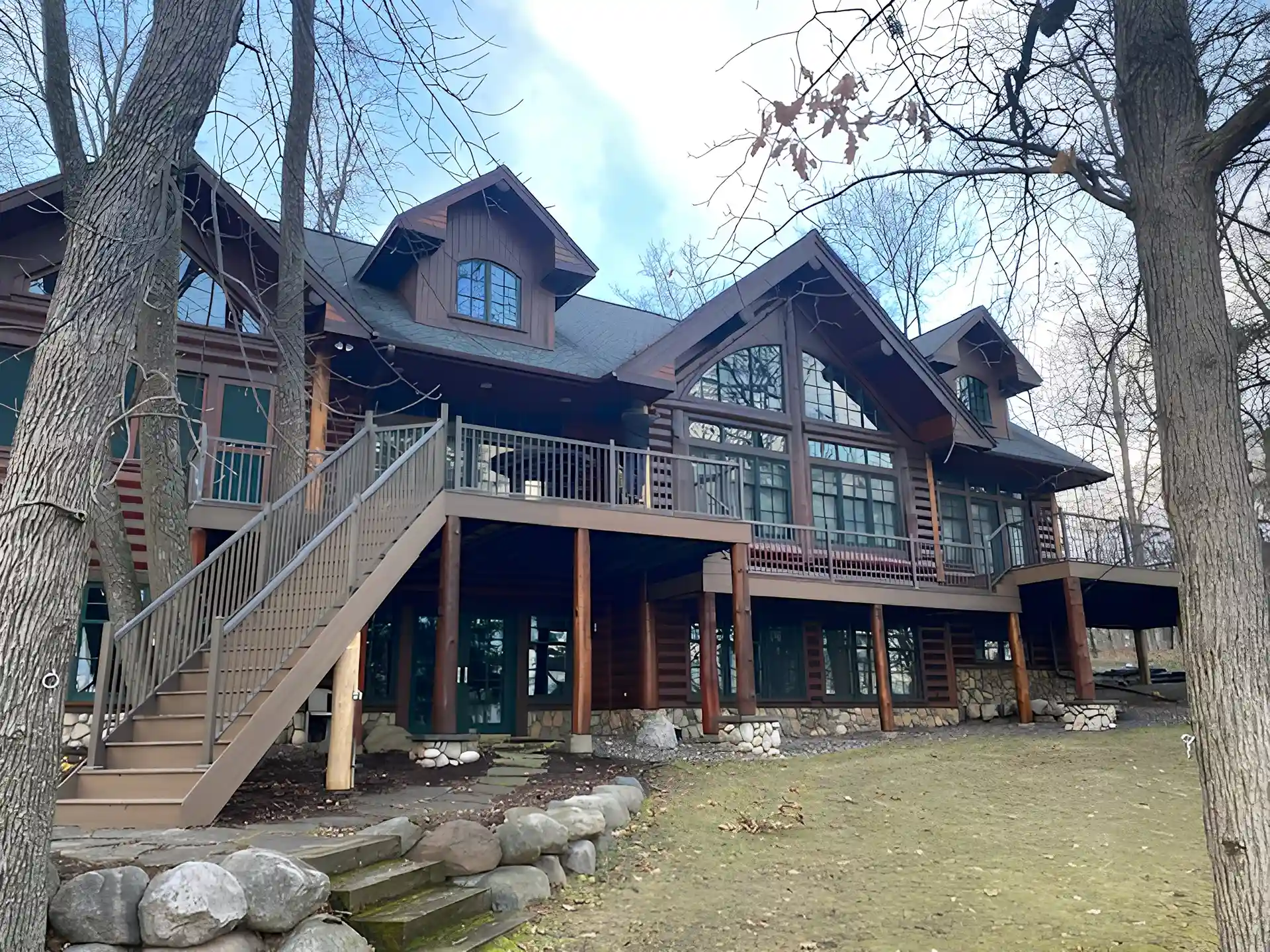
Homeowners must recognize the signs of deck support damage quickly to prevent structural failure. Visible damage often indicates problems that have been developing for a long time. We advise a detailed, hands-on inspection of all log supports, from the ground up to the point they attach to the deck frame. Do not attempt to walk on a deck that shows these critical warning signs.
Wood Rot and Decay
Wood rot in log supports begins when fungi break down the wood’s structural fibers, typically due to prolonged moisture exposure. We look for areas that feel soft, spongy, or crumbly when probed with a screwdriver. Discoloration, especially dark or black patches on the wood surface, signals advanced decay. This level of damage means the support can no longer carry the required load.
Shifting or Leaning Posts
A log support should stand perfectly vertical and secure in its foundation. We find that shifting or leaning posts are often the result of foundation settling or erosion around the base of the support. A post that is no longer plumb transfers the load unevenly, creating significant tension and stress in the surrounding deck frame. This is a clear indicator of required log support replacement.
Cracks and Splits
We pay close attention to deep, long cracks that run parallel to the wood grain. While surface checks are common in drying timber, deep splits that penetrate significantly into the core of the support compromise its compression strength. Water can enter these openings, accelerating wood rot in log supports from the inside out. We evaluate the depth and location of all structural cracks.
Insect Infestation
Carpenter ants, wood-boring beetles, and subterranean termites excavate channels inside the log supports, compromising them from within. We search for wood dust, small exit holes, or the presence of winged insects near the supports. The internal material loss severely reduces the support’s structural and load-bearing capacity. Infestation is a serious sign of deck support failure and often indicates moisture damage.
Corrosion of Fasteners
Metal fasteners, like bolts, brackets, or post anchors, can rust or corrode over time, especially in damp conditions. Corrosion reduces the fasteners’ strength and their ability to keep the post connected to the deck frame or foundation. We check for rust stains running down the support, which indicates internal corrosion of the metal components. A corroded connector can result in complete structural instability in decks.
Consequences of Ignoring Damaged Log Supports
Ignoring the signs of deck support damage creates unnecessary and preventable problems. The initial cost of log support replacement is always less than the cost of a full deck rebuild or repair after a collapse. We always prioritize addressing structural deficiencies immediately.
Structural Instability
Damaged log supports lead directly to structural instability in decks. When one post weakens, the load shifts unevenly to neighboring supports, causing a domino effect of overstressed connections. We see this manifest as bouncing, sagging, or visibly uneven decking. A small amount of decay quickly compromises the integrity of the entire structure.
Safety Hazards
A log support with advanced wood rot poses an extreme safety risk to anyone using the deck. Total failure can happen suddenly under a heavy load, such as during a summer party or heavy snowfall. We never want to see a homeowner or their guests injured due to a known structural issue. Addressing damaged deck support posts is a homeowner’s primary responsibility.
Cost Implications
Be cautious of exponential repair costs. Delaying a necessary log support replacement always increases the final repair cost. Minor damage requires a simple repair. Extensive damage or a structural failure requires emergency shoring, partial demolition, and potentially a full deck overhaul. We know that acting early saves thousands of dollars in the Brainerd Lakes Area.
Steps to Take When Identifying Damaged Log Supports
We advise homeowners to follow a simple three-step process once any potential structural problem is identified. These actions ensure accurate diagnosis and a safe path forward. Do not attempt major repairs or removal without professional guidance.
Conduct Regular Inspections
- Create a Maintenance Schedule: We recommend setting a calendar reminder to perform a detailed visual and physical check of all deck support posts every spring and fall. Look closely at the ground line where wood and concrete meet for signs of water pooling or decay. Probe suspect areas with a thin tool to check for softness, which indicates the start of wood rot in log supports.
- Document All Findings: We ask homeowners to take clear photographs of any damage, including cracks, leaning, or visible insect activity. Keeping a log of the deck’s condition helps us track the progression of the damage over time. This documentation is important for planning the necessary log support replacement.
Use Proper Tools
- Do not Attempt DIY Replacement: We discourage homeowners from attempting replacement unless they have significant structural carpentry experience and the right permits. Working on foundational elements without proper bracing can lead to collapse. Instead, use simple tools for inspection, such as a flashlight, a moisture meter, and a small screwdriver for probing.
- Measure and Quantify: We suggest homeowners use a level to check if the supports are still plumb. Measure any gaps between the post and its foundation. We can use these quantitative measurements to evaluate the severity of the structural instability in decks.
Consult Professionals
- Seek Qualified Structural Advice: We always recommend contacting a licensed contractor specializing in deck structure, like LakeLife Homes Inc. Our team has the specific expertise and tools to determine the full extent of the damage. We can provide a comprehensive, licensed assessment and a clear plan for log support replacement.
- Review Licensing and Insurance: We encourage all homeowners to verify the contractor’s credentials. We maintain all current licensing and insurance required to perform structural repairs in the Brainerd Lakes Area. We provide this documentation before any work begins.
Preventing Future Damage to Log Supports
Log supports will last longer with proactive maintenance. Taking simple steps now prevents the need for another log support replacement in the near future. We focus on controlling moisture, which is the primary cause of damage.
Proper Sealing And Maintenance
- Apply Protective Coatings: We advise using a high-quality stain on all exposed wood surfaces. This coating acts as a barrier against water absorption and ultraviolet light damage. We recommend reapplying the coating every two to four years as part of a routine log support maintenance schedule. We offer exterior staining services.
- Maintain Ground Clearance: We ensure that the bottom of the log support is not in direct contact with the soil. We prefer to terminate the post above the grade level on a concrete pier or anchor, reducing the risk of ground-level wood rot in log supports.
Improving Drainage
- Direct Water Away: We confirm that gutters and downspouts direct rainwater far away from the deck foundation area. Water pooling around the base of the deck support posts is the single fastest way to induce decay. Regrade the soil around the deck if necessary to create a positive slope.
- Manage Landscaping: We keep mulch, dense shrubs, and garden beds away from the log supports. This allows the supports to dry out fully after rain or snow and improves airflow. Trapped moisture increases the risk of signs of deck support damage and decay.
Regular Inspections
- Catch Problems Early: We emphasize that consistent log support maintenance is the best form of protection. Performing inspections helps identify signs of deck support damage when they are small and inexpensive to fix. Early detection prevents the development of catastrophic structural instability in decks.
- Create an Inspection Checklist: We provide our clients with a simple checklist to guide their annual inspection. This list includes checking for cracking, leaning, softness, and secure fastener connections.
Should I Hire A Professional to Replace Damaged Log Supports?
You should always hire a professional to replace damaged log supports due to the structural and safety risks involved. Log support replacement requires detailed knowledge of load-bearing structures and local building codes. We are familiar with the permitting process and specific soil conditions of the Brainerd Lakes Area. LakeLife Homes Inc has the specialized equipment and licensed personnel to perform this complex structural repair safely and correctly the first time.
Why LakeLife Homes Inc is Your Top Deck Contractor in the Brainerd Lakes Area
LakeLife Homes Inc has a proven track record of structural integrity and homeowner satisfaction in the Brainerd Lakes Area. We do not guess when it comes to foundational repairs. Our expertise in log support replacement is built on years of focused structural work, not just surface-level decking. We use specialized techniques to temporarily stabilize your structure before removing and replacing damaged deck support posts.
We use only pressure-treated lumber or approved concrete piers that meet or exceed local structural standards for longevity and durability. We handle all necessary permits and inspections to guarantee the safety and legality of your deck repair. We give you full confidence that your deck is structurally sound and protected against future wood rot in log supports.
Schedule a Design Consultation with Us Today
We take the worry out of structural deck repairs. Ignoring signs of deck support damage is not an option when safety is at stake. We provide a thorough, professional assessment of your entire deck structure. You receive a clear, detailed plan for necessary log support replacement or repairs. Contact LakeLife Homes Inc today to schedule a design consultation. We protect your outdoor investment with licensed, expert structural care.
Log Support Replacement FAQs
How often should I inspect my log supports?
We recommend homeowners perform a detailed visual inspection of all deck supports at least twice per year. Check the supports every spring after the snow melts and again in the late fall before winter begins. This consistent log support maintenance helps you find early signs of deck support damage.
Can I replace a damaged log support myself?
We strongly advise against attempting a log support replacement yourself because it involves stabilizing a load-bearing structure. Without the correct shoring and structural knowledge, you risk structural instability in decks and potential collapse. A professional contractor like LakeLife Homes Inc has the necessary licensing and insurance for this critical work.
What should I do if I find signs of rot in my log supports?
You should immediately stop using the affected deck area and contact a structural deck professional for a full assessment. Minor wood rot in log supports can quickly become a major structural problem. Early detection allows for a targeted log support replacement before the damage spreads further.
Are there treatments to prevent wood rot in my log supports?
Yes, we use several preventative treatments to protect new and existing deck support posts. Applying high-quality deck sealants and wood preservatives forms a protective barrier against moisture infiltration. Proper ground-level installation and good drainage are also critical for long-term log support maintenance.