
In a rush? Read this first.
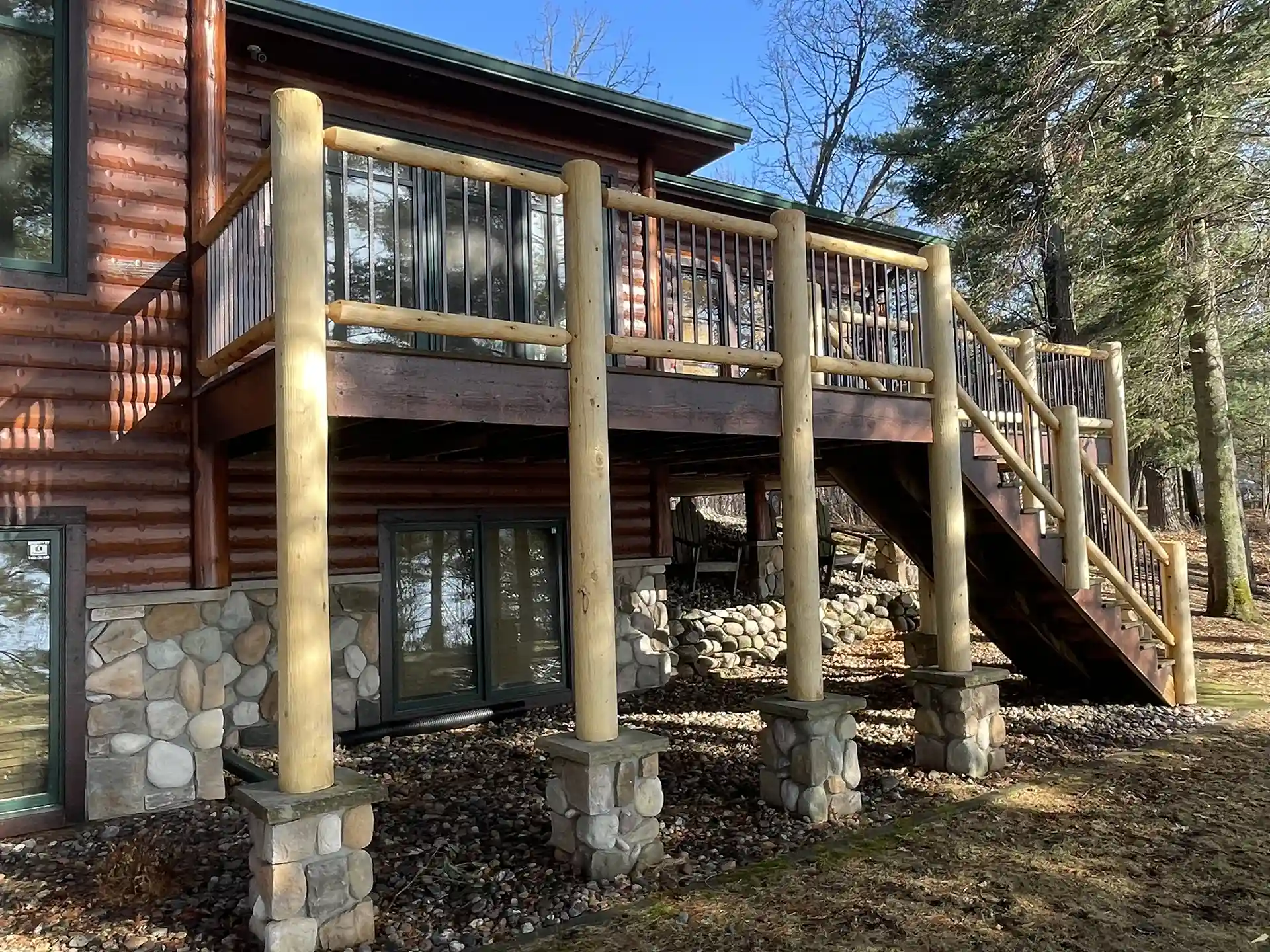
Log railings offer a rustic, natural appearance that perfectly suits a cabin or lakeside property, often providing ten times the lifespan of red cedar when using white cedar. Traditional wood railings offer broader design flexibility but typically require more frequent maintenance to combat the harsh elements of the Brainerd Lakes Area. Choosing the right railing involves balancing the appearance you desire with the long-term upkeep you are prepared to handle. LakeLife Homes Inc helps homeowners select and professionally install the most durable log railings for a high-end look.
Choosing the right deck railing is a major decision for any outdoor space. The railing system you choose will define the look and lifespan of your deck. Homeowners in the Brainerd Lakes Area often debate between the classic look of log railings and the familiar appearance of traditional wood railings. We help you understand the differences between these two prominent deck railing options. This guide compares design, durability, maintenance, and cost for a confident choice. LakeLife Homes Inc is the expert contractor for log railing installation in northern Minnesota.
The Importance of Choosing the Right Deck Railing
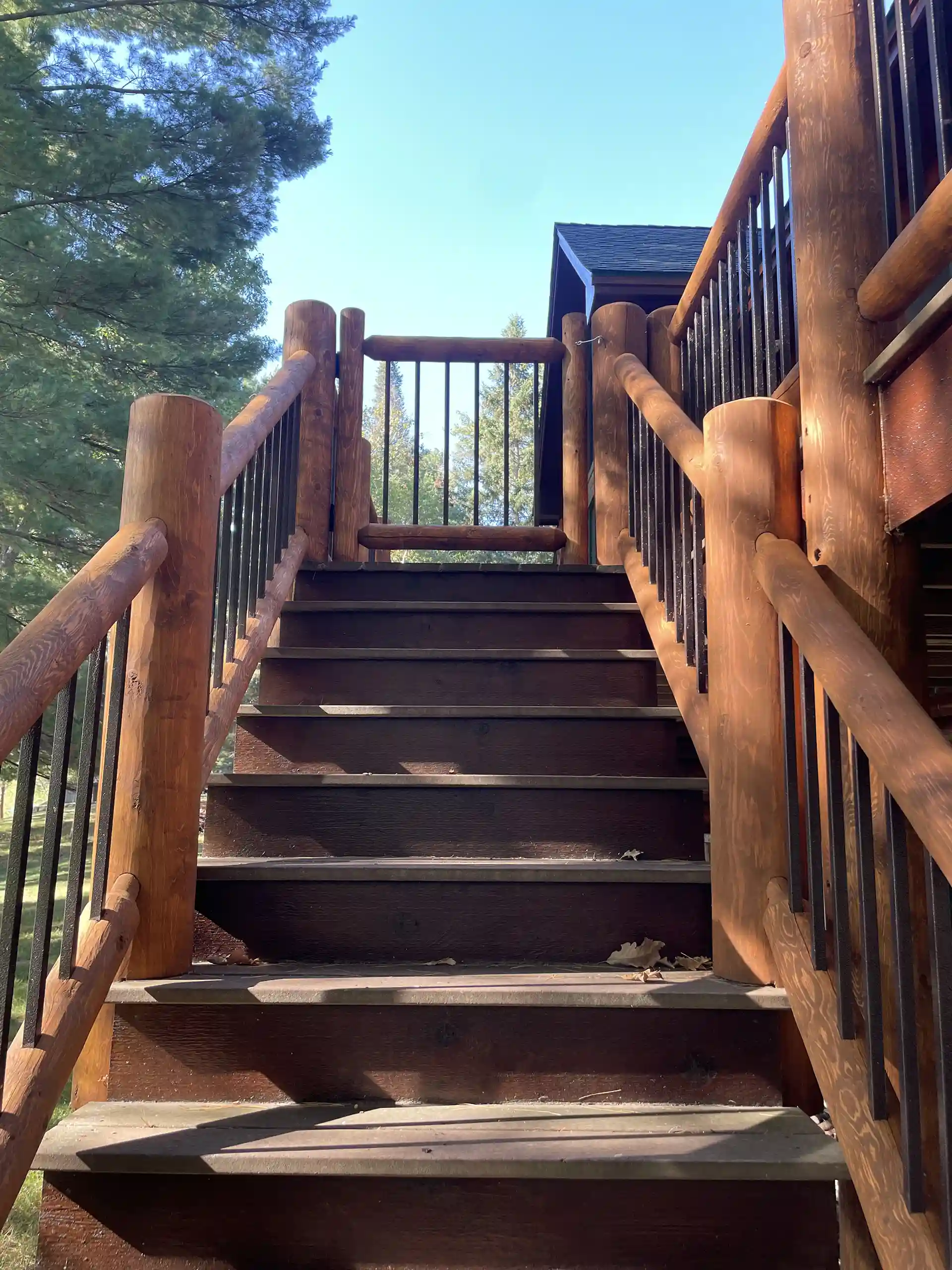
The railing is a structural component and a design statement for your outdoor living space. The railing secures the deck perimeter and meets local building code requirements for safety. A railing system also frames your outdoor views and complements your home’s exterior appearance. Choosing the right materials from the start saves money and effort later.
What are Log Railings?
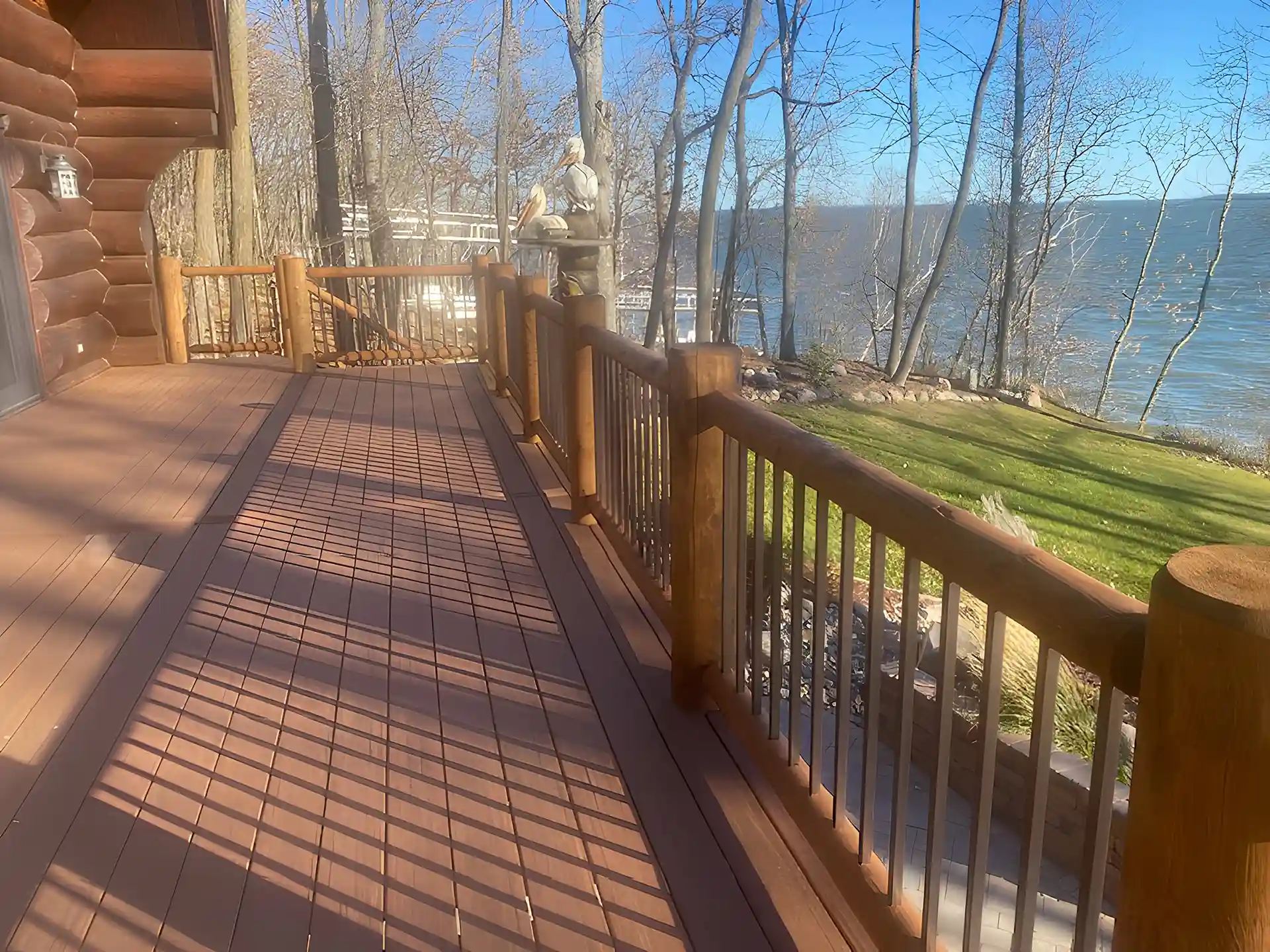
Log railings are fencing systems constructed from milled or natural wooden logs. These systems use full-round or half-round logs for the posts, top rail, and spindles. The natural, rustic look of log railings is popular for cabins and homes near the water.
Design and Customization Options
Log railings provide a distinct, rugged, and natural appearance. The design naturally limits the number of customization options compared to other systems.
- Natural Materials: Log railings are made from various wood species, including white cedar, which we recommend for its superior durability. It has 10x the resistance to rot and pests than regular wood.
- Unique Look: Log construction features a noticeable thickness and a contoured shape, offering a rustic deck railing appearance.
- Design Limitations: The heavy, natural form of the logs can make intricate or highly geometric designs difficult to execute.
Installation of Log Railings
Log railing installation requires specific carpentry skills and expertise in working with natural, rounded materials. Logs are heavy and less uniform than dimensional lumber, which makes the process more complex.
- Requires Expertise: Logs must be properly notched, fitted, and secured to the deck structure to ensure stability and meet safety codes.
- Fewer Subcontractors: Very few subcontractors have the necessary experience to handle log-style construction and fit correctly.
- Time-Consuming: The custom fitting and securing of each log component often takes longer than installing a standard dimensional railing system.
What Are Traditional Wood Railings?
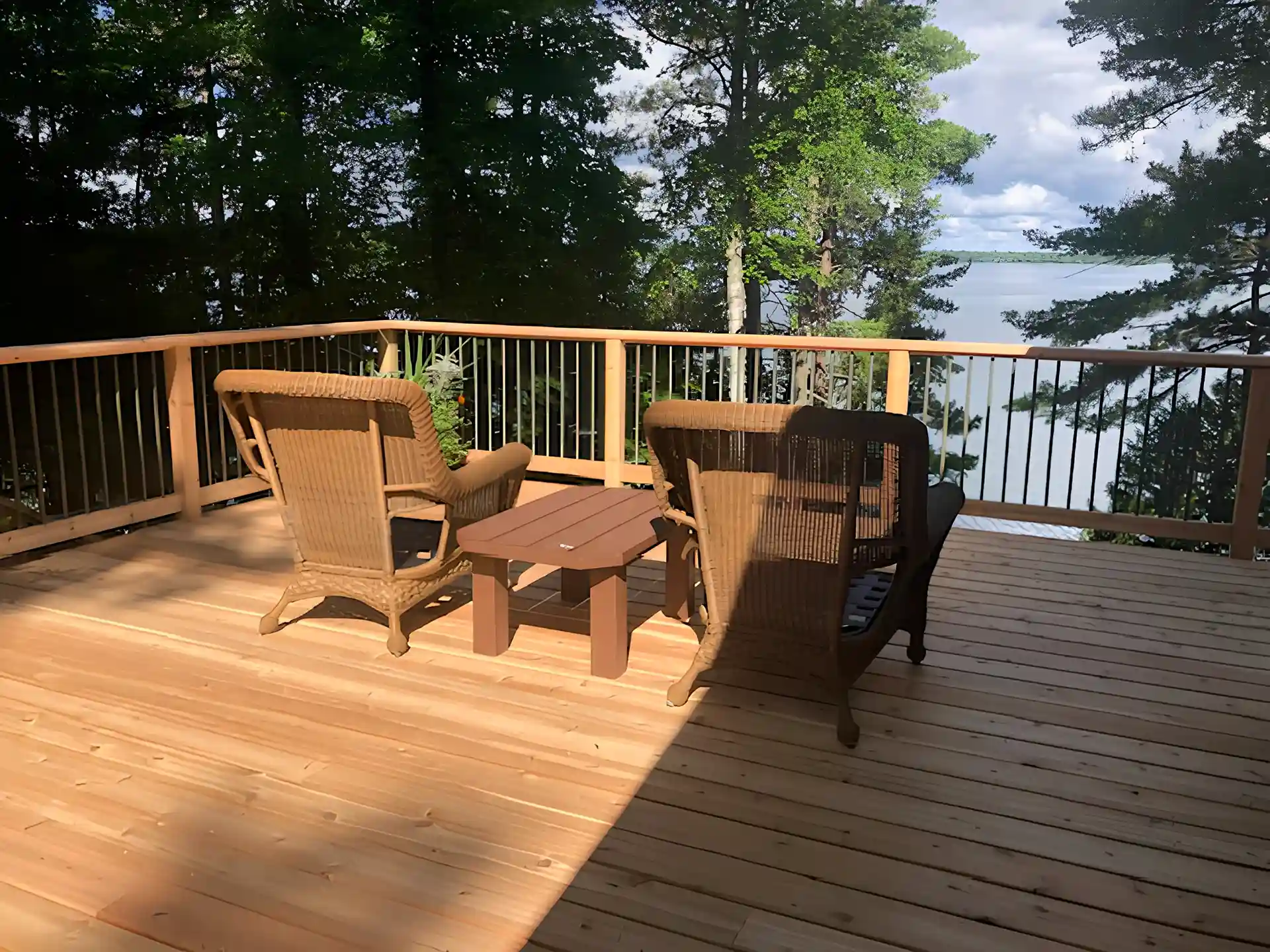
Traditional wood railings are typically constructed from dimensional lumber, wood that has been milled to standard sizes like two-by-fours or four-by-fours. These systems are common and built using straight, flat components.
Design Flexibility
Traditional wood railings offer extensive design versatility. The dimensional lumber can be cut, routed, or combined to create many different styles.
- Variety of Styles: Wood railings can be assembled into vertical, horizontal, or lattice patterns.
- Pre-Built Options: Many manufacturers offer modular sections that speed up installation.
- Color and Stain: These railings are easy to paint or stain, giving the homeowner broad control over the finished color.
Installation of Wood Railings
Installing wood deck railings is straightforward due to the uniform size of the lumber. Most carpenters and experienced homeowners can manage this type of project.
- Simple Cutting: Dimensional lumber is easy to cut and fit using standard construction tools.
- Common Skillset: Most general contractors and experienced builders are familiar with the construction of wood railings.
- Fast Assembly: Pre-made baluster sections and common connectors allow for quick assembly.
Aesthetic Appeal: Log Railings Versus Traditional Wood Railings
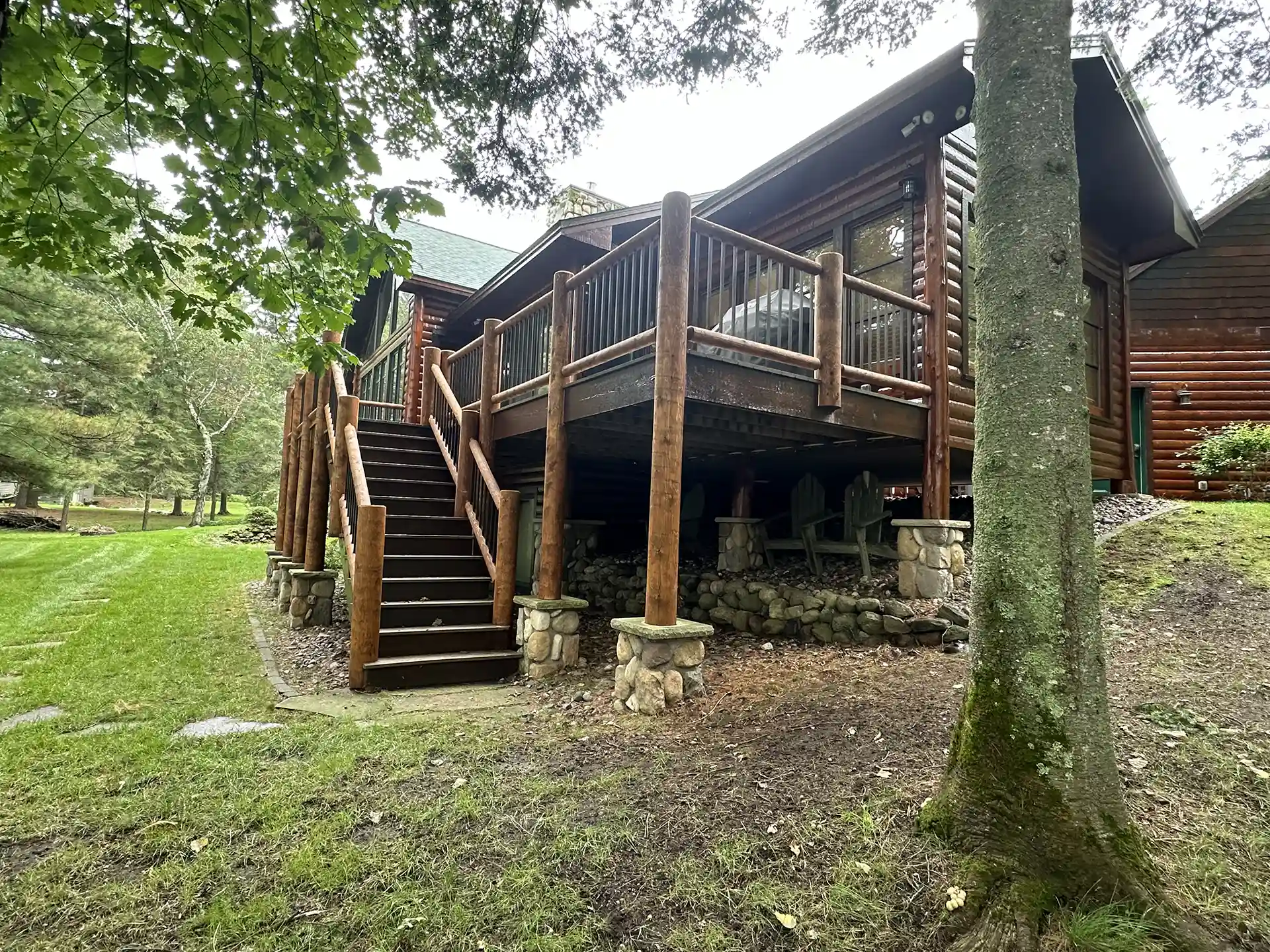
The choice between the two railing types significantly impacts the overall character of your home and deck. Log railings are best for a rustic or natural cabin appearance. Traditional wood railings fit a wider variety of home styles.
- Log Railings: The thick, natural curves of log railings provide a strong connection to nature. This style is an ideal match for lakefront cabins or homes designed to feel like a retreat.
- Traditional Wood Railings: These railings offer a clean, linear look. They can be classic, simple, or highly detailed, depending on the chosen baluster style and trim.
Durability and Maintenance: Which Lasts Longer?
The lifespan and maintenance requirements are key factors in the material selection process. We emphasize materials that offer longevity and durability in the challenging Minnesota climate.
Durability
The durability of any wood deck railing system depends on the species of wood and the quality of the finish. In northern Minnesota, white cedar log railings offer exceptional durability.
- White Cedar Log Railings: White cedar naturally resists rot, decay, and insects. This wood species has a life expectancy up to 10 times that of red cedar.
- Traditional Wood Railings: The durability varies widely. Pressure-treated pine is common but must be stained or painted to delay rot. Untreated cedar or redwood requires rigorous maintenance.
Maintenance
All deck railing options require maintenance, but the frequency and effort differ between the two materials. Less maintenance is generally desirable for second homes or vacation properties.
- Log Railings: White cedar logs require minimal maintenance. A high-quality sealant applied every few years is sufficient to protect the wood from the elements. Log railings are not a burden.
- Traditional Wood Railings: Traditional dimensional wood needs more frequent care. Paint can chip and peel, requiring scraping and repainting. Stains need to be reapplied every 2 to 3 years to prevent moisture damage.
Cost Comparison
Material and labor drive the total cost of any railing project. Log railings generally require a higher initial investment due to the specialized nature of the materials and the log railing installation process.
- Log Railings: The cost is higher due to sourcing materials and the custom-fitting labor involved in construction. The heavy materials and specialized notching require expert installers.
- Traditional Wood Railings: The initial material cost is lower because dimensional lumber is mass-produced and readily available. The installation labor is more common and less costly.
The lower initial cost of traditional wood railings should be weighed against the increased long-term maintenance costs. The low-maintenance life of white cedar log railings can save time and money over two decades.
Safety and Structural Integrity
Both deck railing options provide a safe barrier when installed correctly in accordance with local building codes. Structural integrity depends entirely on professional installation.
- Log Railings: The thick log posts are inherently strong, providing an extremely sturdy barrier. Proper notching and through-bolting are required for a safe installation.
- Traditional Wood Railings: The system’s strength depends on the post spacing, fastener quality, and material condition. Rot is a major structural concern that requires routine inspection to prevent failure.
Environmental Impact: Sustainability and Sourcing
Homeowners are increasingly concerned about the environmental impact of their building materials. Sourcing and the chemical treatment process are the primary considerations.
- Log Railings: The environmental impact depends on the wood species and the sourcing practices. White cedar is a sustainable, naturally rot-resistant material that rarely requires chemical treatment.
- Traditional Wood Railings: Some wood species are sustainably harvested, but dimensional lumber is often pressure-treated with chemicals to achieve acceptable decay resistance.
Installation Process: DIY or Professional Help?
The complexity of the installation process should determine whether a homeowner should attempt a do-it-yourself project or hire a professional. Safety regulations are non-negotiable.
- Log Railing Installation: The best results require a professional with specialized experience. Achieving the correct fit between the natural curves of the logs and the squared deck structure is difficult.
- Traditional Wood Railings: An experienced homeowner can successfully install a basic traditional railing. Complex or custom designs are best left to a professional to ensure safety and structural compliance.
We recommend professional installation for all railing systems. Mistakes in log railing installation or any wood deck railing installation can compromise the safety of the entire deck.
Why Choose LakeLife Homes Inc for Your Log Railings
We are dedicated to building high-caliber outdoor living spaces that match the quality of your home. LakeLife Homes Inc is the expert in log railings for the northern Minnesota region. We understand the specific demands of lakefront properties and cabin country. We work with materials like white cedar that withstand the area’s harsh climate while delivering a sophisticated rustic deck railing look.
Our detail-oriented approach ensures that every spindle and log is properly notched and fitted for superior structural integrity and visual appeal. We pride ourselves on dependable service, showing up when we say we will and doing what we commit to doing. You receive a two-year labor warranty on every project.
Ready to Elevate Your Deck With Custom Log Railings?
Making a confident decision on your railing material starts with a conversation. We discuss your deck railing options and provide clear, factual advice on the best choice for your property. Our team will guide you through the process, providing all the information you need. You can trust the experts at LakeLife Homes Inc to deliver professional log railing installation and a durable result. Do not settle for low-end railings that compromise the appearance and lifespan of your deck. Contact us today to schedule a consultation for your new log railings.
Log Railings FAQs
Are log railings more durable than wood railings?
Log railings made from naturally resistant wood like white cedar are generally more durable than many traditional wood railings. White cedar offers excellent resistance to rot and insects, significantly extending the railing’s lifespan. Traditional wood railings depend heavily on chemical treatment and consistent application of paint or stain to maintain their durability against the weather.
How much do log railings cost compared to wood railings?
Log railings typically have a higher initial cost than traditional wood railings due to the materials and specialized installation. Log materials are more expensive to source and mill, and the labor for custom fitting is more costly. The higher upfront cost is often offset by the greatly reduced long-term maintenance requirements of the log system.
Can I install log railings myself, or should I hire a professional?
Log railing installation requires specific expertise in working with heavy, non-uniform materials, and we recommend hiring a professional. Achieving the structural integrity required by safety codes is complex when dealing with the rounded nature of logs. Traditional wood railings are more DIY-friendly, but a professional is always best to guarantee compliance and safety.
How often do I need to maintain log railings?
Log railings, especially those made from white cedar, require minimal maintenance compared to other wood deck railings. A high-quality sealant application is typically needed every few years to protect the wood from UV exposure and moisture. Traditional wood railings often require annual or biennial applications of stain or paint to prevent decay.
Which type of railing is safer for a family deck, log railings or wood railings?
Both log railings and traditional wood railings are safe options for a family deck when installed correctly and maintained properly to meet local building codes. Log railings have an inherently strong, sturdy presence due to the thick posts. Traditional wood railings must be regularly inspected for rot, as it can compromise their structural integrity over time.